 bestmeatrecipe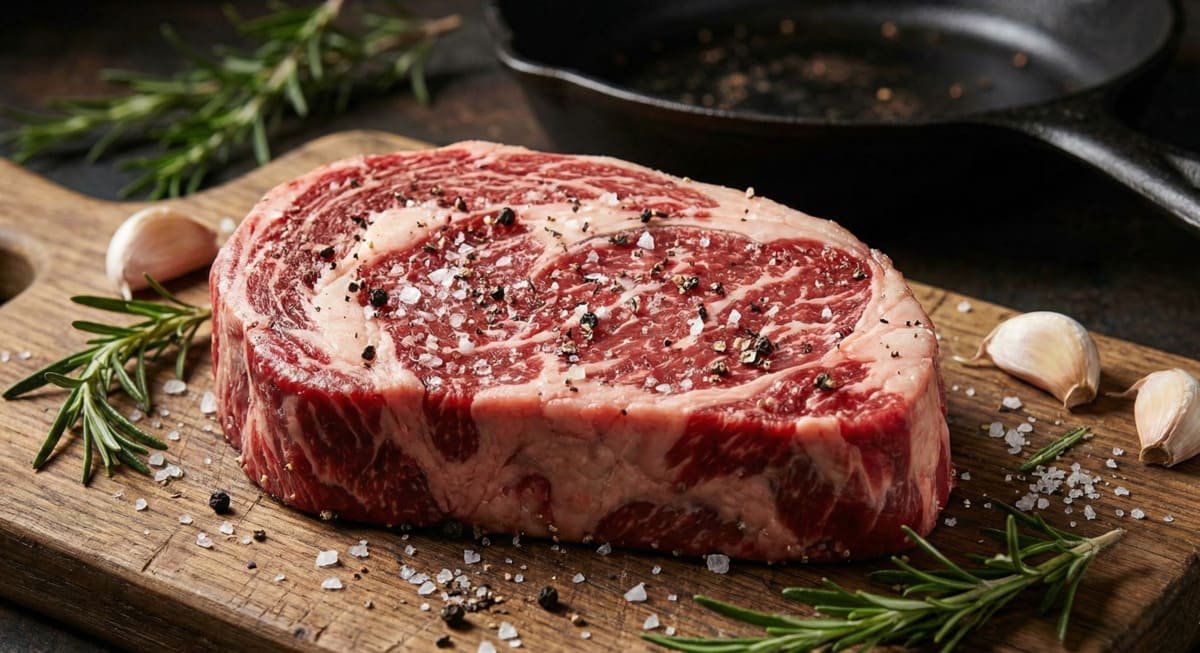
Stop spending $50 or more at a steakhouse for a steak you can cook better at home. Yes, I said better.
Most home cooks ruin expensive cuts of beef because they overcook them or, worse, they don’t get that signature dark, crusty exterior that makes a steak truly great. Today, I am going to teach you the Pan-Seared Ribeye Steak method. This is the exact technique used by top chefs and steakhouses around the world: a smoking hot cast-iron skillet, a heavy sear, and a garlic-butter bath to finish.
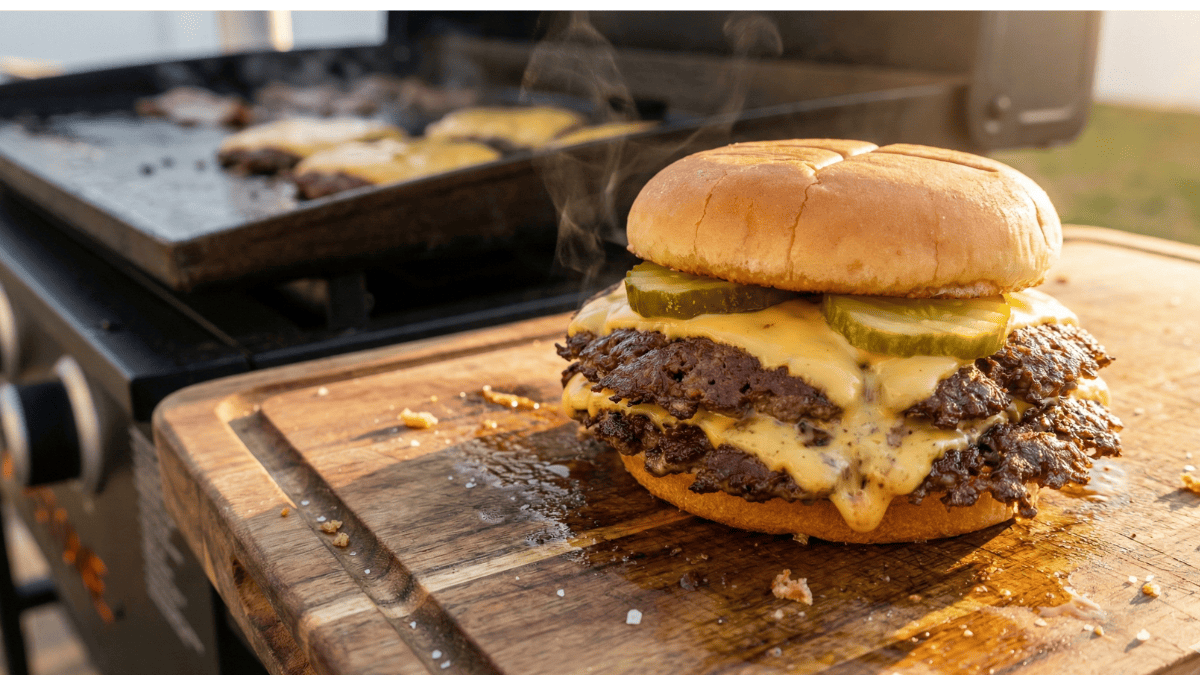
If you loved our famous Blackstone Smash Burger recipe, you are going to be absolutely obsessed with this steak. It is fancy enough for a romantic date night, but easy enough to whip up on a Tuesday evening.
In this comprehensive guide, we will cover everything from choosing the right cut of beef to the science of the sear. Let’s get cooking.
Why the Ribeye is the King of Steaks
When it comes to pan-searing, the Ribeye is the undisputed king. While Filet Mignon is tender, it lacks flavor. Sirloin is beefy but can be tough. The Ribeye offers the perfect balance.
Why is it so good? The secret lies in the Marbling. Those little white flecks of intramuscular fat inside the red meat melt down as you cook, basting the steak from the inside out. This makes a pan-seared ribeye steak incredibly juicy, rich, and flavorful. You don’t need heavy sauces or marinades; the meat speaks for itself.
Equipment for the Perfect Pan-Seared Ribeye Steak
You cannot cook a world-class steak in a flimsy non-stick pan. To get that professional crust, you need the right tools.
- Cast Iron Skillet: This is non-negotiable. Cast iron holds heat incredibly well. When you drop a cold steak into it, the pan stays hot, creating an immediate sear. Thin pans cool down instantly, which steams your meat instead of searing it.
- Heavy-Duty Tongs: You need precise control for flipping and searing the fat strip on the edge.
- Instant-Read Meat Thermometer: Stop poking the meat or guessing. A digital thermometer ensures you hit that perfect Medium-Rare every single time.
- Sharp Knife: To slice against the grain without tearing the meat.
Ingredients Checklist
- The Steak: Look for a 1.5-inch thick Boneless Ribeye. Thickness matters! A thin steak will overcook in the middle before you get a good crust on the outside. Look for USDA Prime or high-quality Choice beef with lots of white specks (marbling).
- Salt: Coarse Kosher Salt or Sea Salt. Do not use fine table salt; it dissolves too fast and makes the meat salty rather than seasoned.
- Pepper: Freshly cracked Black Pepper.
- Oil: Avocado Oil, Grapeseed Oil, or Canola Oil. You need an oil with a high smoke point. Do not use Extra Virgin Olive Oil or Butter at the start—they will burn and taste bitter.
- The Baste (Aromatics): 3 tablespoons of Unsalted Butter, 3-4 cloves of crushed Garlic, and fresh Thyme or Rosemary sprigs.
Pan-Seared Ribeye Steak Instructions (Step-by-Step)
Follow these steps exactly, and you will never eat a dry steak again.
1. Temper the Meat (The Most Overlooked Step)
To make the best pan-seared ribeye steak, take your meat out of the fridge at least 30 to 45 minutes before cooking
2. The “Dry” Technique
Pat the steak completely dry with paper towels. Science Tip: Moisture is the enemy of the sear. If the surface of the steak is wet, that water has to boil off before the meat can brown. This creates steam, resulting in a grey, sad-looking steak. Dry meat equals a crispy crust.
3. Season Like a Pro
Don’t be shy with the salt. A thick pan-seared ribeye steak needs a lot of seasoning. Sprinkle Kosher salt and black pepper liberally on the top, bottom, and don’t forget the sides. Press the seasoning into the meat with your hand.
4. The Sear (High Heat)
Place your cast-iron skillet over High heat. Add 2 tablespoons of avocado oil. Wait until the oil is shimmering and just starting to smoke.
- Carefully lay the meat into the skillet away from you (to avoid oil splashing). A proper pan-seared ribeye steak requires high heat to form a crust.
- Do NOT touch it. Let it sear undisturbed for 2-3 minutes.
- You want a deep, dark brown crust (this is the Maillard reaction). If you flip it too early, you lose the flavor.
5. The Flip and the “Arrosé” (Butter Basting)
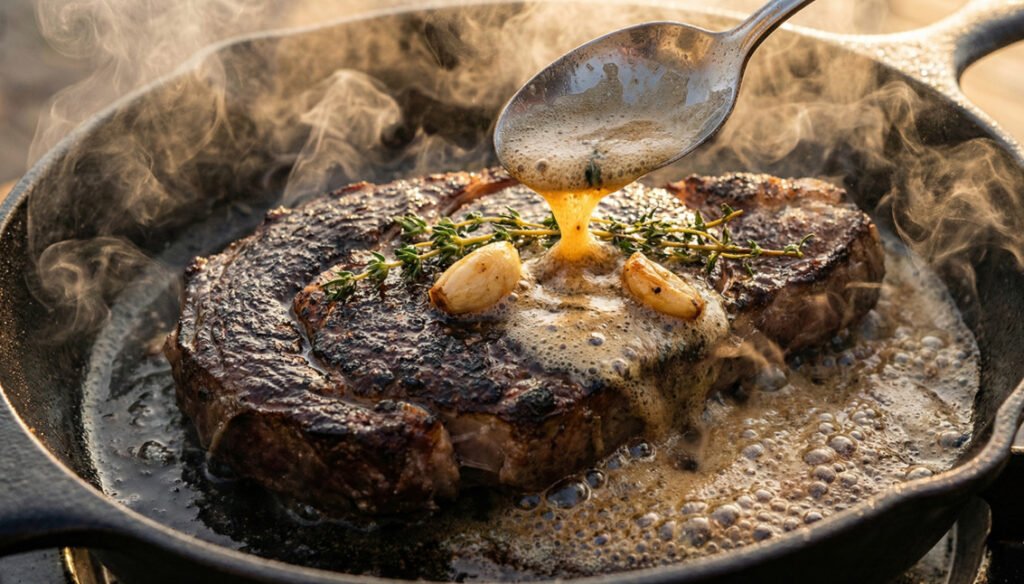
Flip the steak. You should see a gorgeous, mahogany crust. Cook for another 2 minutes on high.
- Now, reduce the heat to Medium.
- Toss in your butter, smashed garlic cloves, and herbs.
- The Baste: Tilt the pan slightly so the melting butter pools at the bottom with the garlic and herbs. Use a large spoon to continuously scoop that foaming, hot, garlic-infused butter over the steak.
- This technique (called Arrosé in French cooking) adds incredible nutty flavor and cooks the steak gently to finish it off.
6. Check for Doneness
Insert your thermometer into the thickest part of the steak. Pull the steak off the heat when it is 5 degrees lower than your target temperature (it will continue cooking as it rests).
Temperature Guide:
- Rare (Cool Red Center): Pull at 120°F (Target 125°F)
- Medium-Rare (Warm Red Center – Recommended): Pull at 130°F (Target 135°F)
- Medium (Warm Pink Center): Pull at 140°F (Target 145°F)
- Well Done: Please, don’t do this to a Ribeye! (But if you must, pull at 155°F).
7. The Rest (Patience is Key)
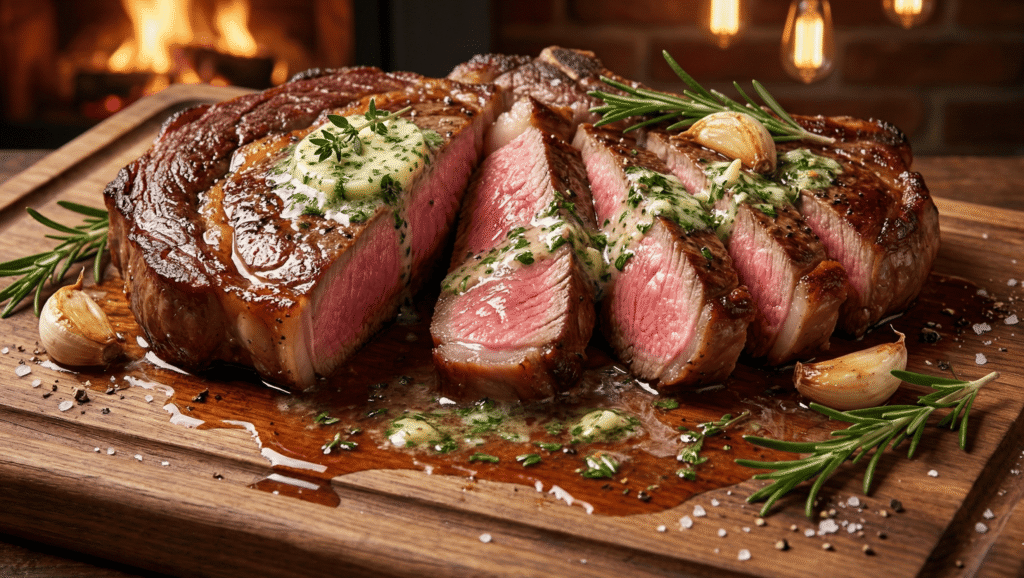
Transfer your pan-seared ribeye steak to a cutting board or a warm plate. Pour the remaining butter from the pan over it. Wait 5 to 10 minutes. If you cut into the steak immediately, all those precious juices will run out onto the board, leaving your meat dry. Resting allows the muscle fibers to relax and reabsorb the juices.
Pro Tips for the Best Steak of Your Life
- Render the Fat Cap: Ribeyes have a thick strip of fat on the outer edge. Before finishing, use your tongs to hold the steak vertically (on its side) and sear that fat strip against the pan for 30 seconds until it is crispy and rendered.
- Don’t Overcrowd: When cooking a pan-seared ribeye steak, make sure not to crowd the pan: If you are cooking two steaks, make sure there is plenty of space between them. If the pan is too crowded, the temperature drops, and the steaks will steam. Cook in batches if necessary.
- Garlic Butter Topping: Want to take it to the next level? Mix some soft butter with minced garlic and parsley, and place a dollop on the hot steak right before serving.
What to Serve with Ribeye Steak?
Since this pan-seared ribeye steak is so rich, pair it with sides that cut through the fat or soak up the juices:
- Potatoes: Mashed potatoes or crispy roasted potatoes are classic.
- Vegetables: Grilled asparagus, sautéed mushrooms, or a fresh arugula salad with lemon vinaigrette.
- Wine: A bold Cabernet Sauvignon or Malbec pairs perfectly with the fatty richness of a Ribeye.
Now that you have mastered the art of the perfect steak, you are ready to impress. Grab a glass of wine, slice into that perfectly pink center, and enjoy.
Looking for more ways to cook beef? Check out our full collection of Beef Recipes here.